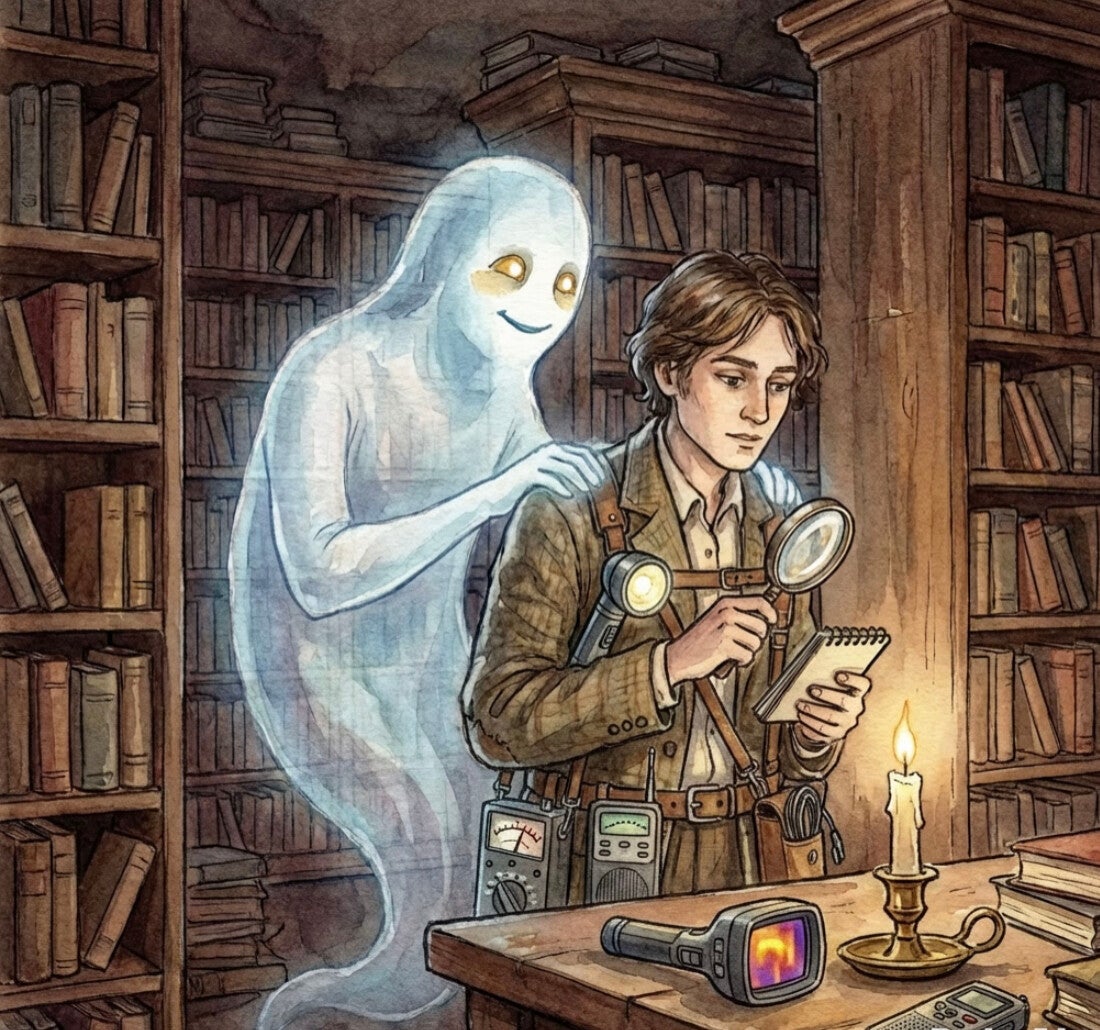
Paranormal Investigations: What To Know Before You Begin Stepping into places where history lingers and spirits may remain is never just a walk‑through — it’s a journey into the unknown.
Over years exploring historic sites across the UK and working alongside my team, I’ve learned that respect, preparation and safety always come first. Every location carries its own energy, story and atmosphere; what works in one place may be very different in another.
Investigation isn’t about chasing thrills or forcing contact — it’s about observing, listening and approaching the unseen with care. Whether you’re new or have been exploring for a while, knowing how to conduct yourself helps keep you grounded and makes every session meaningful. Below you’ll find our core Do’s and Don’ts, built from real‑world experience, to guide you safely and respectfully through every investigation followed by some different types of equipment and methods to carrying out your own paranormal investigation.
✅ DO’S & ❌ DON’TS FOR RESPONSIBLE PARANORMAL INVESTIGATIONS
DO:
• Begin every session with clear intention, respect, and a calm, grounded mindset
• Establish protective boundaries or sacred space to keep your energy balanced and secure
• Use tools alongside intuition and experience, never as a replacement for good judgment
• Calibrate and test all equipment beforehand; note temperature, lighting, and known electrical sources first
• Treat all encounters with courtesy — never demand, provoke, or mock what you may find
• Work in a team for safety, shared observation, and cross‑verifying experiences
• Record all readings, times, locations, and impressions clearly for later review
• Close every investigation properly to seal the space, clear residual energies, and protect your own well‑being
• Always obtain written permission before entering or working on private or protected land
DON’T:
• Never enter any site without explicit permission from the owner or authority
• Do not investigate when you are tired, unwell, stressed, or emotionally unbalanced — this clouds perception and weakens your energy
• Avoid using tools or techniques you have not fully learned or practised safely
• Never leave mobile phones, smartwatches, tablets, or radios active — switch them to Airplane Mode; their signals cause strong interference and false readings
• Do not assume every unusual sound, feeling, or reading is paranormal; always rule out natural and man‑made causes first
• Never use communication tools such as Ouija boards or glass work without clear boundaries, focus, and a proper closing ritual
• Do not push or pressure a presence to respond; if it feels uncomfortable or uncooperative, step back and stop
• Never share findings in a way that sensationalises fear or disturbs the local community or site’s reputation
• Do not leave equipment running unattended or interfere with the fabric or contents of the location
We believe that true understanding of the unknown comes from combining time‑honoured spiritual practices with modern tools and intuitive wisdom. That’s why we incorporate a diverse range of techniques into every session and investigation — each chosen for its unique purpose, and always used with respect, intention, and safety in mind. Below is a list of popular items utilised during paranormal investigations.
• Pendulums
A sensitive instrument used to detect subtle shifts in energy fields. Usually made of crystal, wood, or metal, it works by responding to both the user’s focused intention and the energies present in the environment. When held steady and still, it will swing, rotate, or remain stationary to answer yes/no questions, point to specific areas of activity, or confirm whether an energy feels welcoming, neutral, or requires careful handling. It acts as a simple bridge between the conscious mind and the subtle layers of energy that surround us, helping us map where attention should be directed.
• Sacred / Energy Circles
Created before any work begins, this is a defined boundary of safety and focus. It may be formed through visualisation, spoken intention, placement of crystals or symbols, or ritual practice. The circle serves two key purposes: it keeps unwanted or chaotic energies from entering the working space, and it contains and protects the energy of the investigators, keeping minds clear and emotions stable. It creates a respectful agreement that only those energies with positive intent and a willingness to communicate may participate, setting the tone for the entire investigation.
• EMF Meters
Electromagnetic Field meters measure fluctuations in the invisible energy fields that surround us. Normal everyday sources — such as electrical wiring, lighting circuits, appliances, and overhead cables — produce steady, consistent readings. However, sudden, unexplained spikes, fluctuations, or changes in pattern that have no identifiable physical source can indicate shifts in energy that may be linked to spiritual activity. Important note: Always switch mobile phones, smartwatches, and other electronic devices to Airplane Mode; if left transmitting, they emit strong electromagnetic signals that will distort results and create false positives, making it hard to tell real anomalies apart from interference.
• Temperature Recorders & Full‑Spectrum Cameras
Sudden and unexplained changes in temperature are one of the most commonly reported signs of a spiritual presence. Temperature recorders track readings continuously over time, allowing us to identify drops or rises that occur rapidly and cannot be explained by drafts, heating, ventilation, or weather conditions. Full‑spectrum cameras go far beyond what the human eye can perceive; they capture not only visible light but also infrared and ultraviolet wavelengths. This means they can record light anomalies, shadows, changes in air density, and energy manifestations that remain invisible to us naturally, giving us a much fuller visual record of what is taking place in a space.
• SLS Cameras
Structured Light Sensors work by projecting a precise grid of infrared dots across the environment, then mapping how that grid reflects back to the camera. It creates a digital outline of all solid objects, walls, and furniture. When used in an investigation, it can detect shapes, outlines, or figures that do not match the physical structure of the room — even when nothing is visible to the naked eye. It can also track movement and changes in shape or position over time, providing a visual record that helps us compare what our intuition tells us with what technology is capturing.
• Cat Balls
A simple, low‑tech but highly effective tool often used to observe physical interaction and movement. These are lightweight, smooth, or textured balls — often made of rubber, plastic, or foam — designed to roll easily with only minimal force. Placed on a flat, level surface free from drafts, vibrations, or uneven ground, they act as a clear visual indicator of energy influence. If a ball moves, rolls, or changes position without any obvious natural cause such as air flow, sloping floors, or nearby vibrations, it suggests a possible interaction or manipulation of energy from a presence. They are easy to set up, visible from a distance, and work well alongside cameras to record any movement, offering straightforward, undeniable evidence of activity that everyone can see and understand.
• Radio Channel Scanning
This technique uses a radio receiver or specialised spirit communication device to sweep across a wide range of frequencies, from AM and FM bands to shortwave and UHF. The goal is to listen for voices, sounds, words, or phrases that do not belong to any known broadcast station, background hum, or electrical interference. By moving slowly and asking clear questions, we create an open channel where consciousness may use the energy of the radio waves to shape sound and communicate. Every response is noted, recorded, and cross‑checked against known frequencies to rule out false signals.
• Word‑Bank Apps & Digital Tools
These tools use programmed libraries of words, phrases, and symbols, selected or displayed at random. When used with clear intention and a specific question in mind, they act as a bridge between the conscious mind and the energies present. The theory is that focused thought can influence which terms appear, offering clues, answers, or insights that align with what is being asked. They are never taken as absolute proof on their own; instead, they are interpreted alongside intuition, other evidence, and the overall feeling of the investigation, helping to build context and meaning.
• Ouija Boards
A traditional communication tool consisting of a smooth board marked with letters, numbers, and simple words, and a movable pointer called a planchette. It is only ever used with strict respect, clear boundaries, and a positive, grounded state of mind. Before starting, we state our purpose clearly and set the intention that only helpful, honest energies may communicate. Questions are asked calmly, and responses are received through the movement of the pointer. Every session is opened and closed properly, and the board is respectfully cleared and put away afterward to ensure no unwanted connections remain open.
• Glass Work
One of the oldest and most gentle methods of communication, often used when a softer approach is preferred. It uses an ordinary glass or smooth pointer placed upside down on a flat surface marked with letters, numbers, and symbols. The investigators rest their fingertips lightly on the glass without pushing or guiding it, allowing subtle energy influences to cause it to move. It can spell out words, answer questions, or indicate directions, working in a similar way to the Ouija board but often felt to be more accessible and less intimidating for those new to the practice.
• Calling Out
A direct but deeply respectful technique where we speak aloud in a calm, clear, and steady voice. We introduce ourselves, explain our purpose for being there, and invite any consciousness or presence that wishes to communicate to make itself known. We never shout, demand, or use aggressive language; instead, we create an atmosphere of safety and courtesy, letting it be known that we are listening and willing to understand. This encourages those who may be confused, attached, or lingering to feel secure enough to respond, whether through sound, movement, or changes in the environment.
• Psychic Links & Pattern Cards
Psychic linking involves opening our intuitive awareness to connect with the history, emotions, and energies of the location and any beings present. It is a process of quieting the mind and focusing on impressions, feelings, images, or thoughts that arise. Pattern cards support and strengthen this connection; they use abstract shapes, symbols, colours, and imagery that act as a focal point. By selecting or interpreting the cards, we can translate vague feelings and impressions into clearer insights, helping us uncover hidden meanings, emotions, or messages that might otherwise remain out of reach.
• Tarot Guidance
Tarot brings a layer of symbolic and intuitive understanding that equipment alone cannot provide. While meters, cameras, and recorders give us facts, measurements, and images, Tarot helps us interpret why activity is happening, what it means, and how best to respond. Each card carries rich symbolism and energy, offering perspective on the nature of the presence, its intentions, and its connection to the location. It helps us make sense of confusing or subtle experiences, turning raw data and impressions into deeper understanding, clarity, and respectful guidance for every investigation.
A popular purchase for investigations is a REMPOD. A simple, visual and audible device which has grown in popularity due to its mixed responses given allowing investigators to obtain more captive evidence.
• REM POD (Radiating Electromagnetic Pod)
A highly responsive communication and detection tool that works differently from standard EMF meters: instead of only measuring existing fields, it generates its own stable 360‑degree electromagnetic field around its telescopic antenna. Any disturbance, disruption, or manipulation of this field triggers clear visual lights and audible alerts, making it ideal for real‑time interaction and confirmation of presence.
How it works & how to use it:
1. Setup: Gently extend the antenna fully upright, place the unit on a flat, stable, non‑metallic surface, well away from wiring, outlets, appliances, phones, radios, and drafts — all common causes of false triggers. Switch it on; it will run a quick self‑test with flashing lights and beeps, then settle to a steady baseline after about 5 seconds.
2. Baseline first: Leave it undisturbed for 2–3 minutes to map normal background activity. Some models auto‑calibrate; others let you manually reset the baseline to match the room’s conditions.
3. Reading signals: (depending on model and style this is based on a high end market item) As something enters the field, lights activate in sequence from green (farthest, ~3–4 inches) → yellow → blue → red (closest, <1 inch), with sound rising in pitch and volume the nearer the disturbance gets. Many newer units also detect sudden temperature shifts (±1–5°C), linking energy change to cold/warm spot activity.
(simpler models activate both light and sound mode modes together only)
4. For communication: Ask clear, simple questions — invite a presence to approach the antenna for “yes”, move away for “no”, or light specific colours to answer. Responses are immediate and easy to see, even in low light.
5. Interpretation: Never rely on it alone — cross‑check with other tools, rule out natural causes, and note if responses are consistent, repeatable, or match other evidence.
Key notes: Always keep your own body, hands, and devices at least 30cm away during use; turn all phones/tablets to Airplane Mode to prevent interference.
And ofcourse the simplest of equipment a camera, pens n pencils and something to write notes etc in 👻

💡 A helpful tool for paranormal investigators
Many spirits exist outside of time as we know it—they often won’t know or state an exact year—but they nearly always remember clearly who was King or Queen when they walked the earth. That makes a chart like this so valuable: if they give you a monarch’s name, you can instantly narrow down their era and piece together their story. As paranormal investigators, every detail matters, so anything that helps us gather those vital clues is always a great asset to have in our work.

Scrying: Gazing into the Unknown
Scrying is one of the oldest, most revered, and most intuitive methods of spiritual observation and communication, practised across nearly every culture and tradition throughout recorded history. Often called “the art of seeing beyond,” it is far more than simply looking at a surface — it is a deliberate process of quieting the busy, logical mind, softening physical vision, and opening the inner eye to receive impressions, symbols, images, and messages that lie beyond ordinary perception. Whether used to gain insight into a location’s history, connect with lingering energies, or understand the nature of phenomena encountered during an investigation, scrying acts as a bridge between the visible world and the subtle, unseen layers of existence. It works on the principle that a still or reflective surface helps focus intention, calm mental noise, and amplify our natural intuitive abilities, allowing us to perceive what is otherwise hidden from everyday sight.
There are many ways to practise scrying, each using a different medium to create that focal point. While the tools change, the core approach remains the same: relaxation, clear intention, patience, and an open yet grounded state of mind. Below are the most common and effective methods used in our work:
• Mirror Scrying
The most widely recognised form, using a dark‑backed, black obsidian, or specially crafted scrying mirror rather than a standard household mirror. Its surface is designed to reduce clear reflection, so you see only dim light and shadow rather than your own face. Working in soft, candlelit darkness, you gaze gently into the glass, letting your vision relax and go slightly unfocused. At first, it may seem only to fill with mist, clouds, or shifting light; as you continue, shapes, faces, scenes, or symbols may begin to form. This method is excellent for clear communication and receiving detailed visions, making it a favourite during investigations to connect with energies present in a space.
• Crystal & Stone Scrying
Using a natural crystal sphere, polished obsidian, smoky quartz, or other smooth, translucent stones. Crystals naturally hold, focus, and amplify energy, acting as a clear lens for inner perception. You place or hold the crystal before you, directing your gaze into its core. As light refracts through its structure, it creates shifting patterns, internal reflections, and variations in colour that the intuitive mind translates into meaningful impressions. Obsidian is especially valued for its deep, glass‑like darkness, which feels like gazing into a quiet doorway or void where images can emerge.
• Water Scrying
One of the simplest, most accessible, and most ancient forms of scrying. It uses a clean, still vessel filled with pure water — sometimes darkened with a drop of natural ink or left clear and placed in gentle shadow. You look into the surface, observing how light plays across it, how ripples form, or how reflections bend and shift. Still water brings clarity and calm, while gentle movement can indicate change, emotion, or activity. Linked closely to intuition and feeling, this method is particularly useful for sensing the atmosphere of a location, understanding emotional residues, or receiving messages connected to memory and history.
• Smoke & Mist Scrying
Working with rising smoke from natural incense, smudge sticks, or beeswax candles, or even naturally occurring mist and steam. You watch closely as the smoke twists, rises, gathers, drifts apart, or holds its shape. It is read in much the same way as interpreting cloud formations — looking for recognisable shapes, directional movement, or patterns that carry meaning. Smoke is seen as a carrier of energy and intention, helping to lift subtle impressions into something visible. It is often used during investigations to map how energy flows through a room and to identify where activity may be strongest.
• Fire & Flame Scrying
Gazing steadily into the flame of a candle, lantern, or hearth fire. Fire is a powerful purifier, transformer, and amplifier of energy, and its behaviour carries its own language. A steady, bright, and upright flame suggests balanced energy, clear conditions, and open communication. A flickering, dancing, sputtering, or shrinking flame may indicate shifting energy, resistance, disturbance, or the presence of something trying to make itself known. This method also helps to clear and protect your own energy field while you work.
Working with Care and Closing Properly
As with every technique we use, scrying requires preparation, respect, and proper closure to keep both you and your work safe and clear. Before you begin, always take time to ground yourself, centre your energy, and set a clear, firm intention — stating exactly what you wish to achieve and that only honest, helpful, and positive energies may connect with you. It is also wise to call upon your own guides, protective boundaries, or sacred space before starting, to ensure you remain anchored and secure.
Remember that scrying is a skill that develops over time; do not be discouraged if images or impressions feel faint or unclear at first. Write down everything you notice — even fleeting feelings, colours, or shapes — as meaning often becomes clearer later. Most importantly, never rely on scrying alone; always cross‑reference what you receive with your other tools, observations, and the shared impressions of your team.
When you finish, it is vital to close the session properly. Thank any energies or guides that have been present, clearly state that the connection is now closed, and dismiss any remaining impressions. Clear your mind, wash your hands or splash cold water on your face, and take a few deep breaths to return fully to your normal, grounded state. Store your tools carefully and cleanse them before next use, ensuring they remain clear and ready for future work. When practised with patience and respect, scrying becomes a powerful way to deepen your understanding, expand your awareness, and bring greater clarity to every investigation.
Create Your Own Website With Webador